Your Ad Here

Tuesday, October 31, 2006

U.S. Health Officials Build 'Very Large Scale' Flu Simulations

Researchers at the U.S. National Institutes of Health (NIH) have been at work at computational simulations that model potential widespread outbreaks of the avian flu in the human population.

"What we have been doing at NIH is build computational simulation models on a very large scale. We have produced two models of Thailand published in Nature and Science, two models of the U.S. published in Proceedings of the Academy of Sciences and Nature," says Joshua Epstein, senior fellow, economic studies at the The Brookings Institution and director of a global epidemic model at NIH.

"Our missions, as it were, are to project the global spread of these diseases, development containment strategies, and offer real-time decision support in crises," Epstein adds.

"But why should you believe any of these models?" he asks.

"One answer to that is that we try to make them credible by using what data exists and calibrating the models to known outbreaks of influenza," he says. "We can try to at least get the social contact dynamics right, and in some cases we know how the bug acted in human hosts and so we can reconstruct these epidemics on computers and say this is how the 1968 global flu really did unfold on the 1968 population transportation system, and that is what we are going to do."

So far, the avian flu has not been transmitted from human to human, only animal to human, but researchers are worried that could change, triggering a worldwide flu pandemic.

"So we are going to say let's reconstruct the 1968 flu, then leaving the 1968 bug, let's update the transportation and population to modern levels and then with modern levels captured let's make the best ... biomedical estimate we can about what a human-to-human variant would look like and plot that into this contact dynamic and make some sort of ballpark estimate of how things might unfold under a huge array of uncertainties, but nonetheless, we think it is a valuable exercise," Epstein says.

New Program To Calculate 'Ecosystem Services'


The Nature Conservancy, World Wildlife Foundation (WWF) and Stanford University today announced the launch of an innovative partnership that aims to change the way governments and policy makers think about nature worldwide.

The program, called the Natural Capital Project, is an unprecedented effort to calculate the economic and other benefits nature provides to people -- so-called "ecosystem services" such as clean water, flood control and climate regulation. By answering the question, "What is nature worth to people?" the Natural Capital Project highlights the many ways in which the world's forests, grasslands, arid lands, freshwater systems and oceans, support their daily lives.

"This exciting project brings together the expertise of leading field conservationists and a world-class university," says Steve McCormick, president and CEO of The Nature Conservancy. "Recognizing that ecosystems should be protected for their intrinsic values as well as their economic values will help us prioritize the conservation of the world's natural systems. This, in turn, can help improve the quality of life for people throughout the world."

Ecosystem services can include everything from soil fertility to clean air to pest control. These services are essential to human health. As the world's natural resources are depleted through unsustainable land-use practices, important ecosystem services are being lost at an alarming rate. The impact is greatest felt by the world's poorest people, who cannot afford to buy or replace the resources they are losing from nature.

Two groundbreaking scientific papers, authored by scientists from Natural Capital Project partner organizations, were published in PLoS Biology. These papers are the first to show how ecosystem services can influence the outcomes of conservation planning efforts. Research led by Kai Chan at University of British Columbia and Rebecca Shaw of The Nature Conservancy suggests that in California biodiversity conservation is highly compatible with the protection of ecosystem services upon which Californians depend and should be included in systematic conservation planning. And research led by Robin Naidoo at WWF revealed that based on a study of a landscape in Paraguay the economic benefits of conserving forests exceed the benefits of farming the same land in many areas. Chan's paper can be found at http://releases.usnewswire.com/redir.asp?ReleaseID=75352&Link=http://dx.doi.org/10.1371/journal.pbio.0040379 and Naidoo's paper can be found at http://dx.doi.org/10.1371/journal.pbio.0040360.

"Learning to map the economic values of nature will give us the information we need to conserve ecosystems for the benefit of biodiversity and people. That's what these papers and the Natural Capital Project, are about," says Taylor Ricketts, director of WWF's Conservation Science Program and co-author of one of the papers. "Our early results indicate that the benefits of conservation can far outweigh costs and that if land owners could capture the value of ecosystem services, like carbon storage, conservation can be a profitable use of land."

The Natural Capital Project will begin working with local partners in three pilot areas -- the Eastern Arc Mountains of Tanzania, the upper Yangtze River Basin in China and the Sierra Nevada region in California -- to assess the value of the ecosystem services and to then help incorporate those values into policies and resource decisions.

Verizon FiOS TV OK'd In 2 More Mass. Towns


Boards of selectmen in two more Massachusetts communities granted cable-TV franchises to Verizon Monday night (Oct. 30), paving the way for video choice for an estimated12,000 more Bay State households.

The franchises, granted in Lexington and Tyngsborough, bring to 25 thetotal number of Massachusetts communities where Verizon's FiOS TV is orwill soon be available.

"We are thrilled to be able to bring FiOS TV to residents in Lexingtonand Tyngsborough," says Donna Cupelo, Verizon region president forMassachusetts and Rhode Island. "Since the launch of FiOS TV inMassachusetts earlier this year, we are continuing our efforts to meet theconsumer demand for cable TV choice."

FiOS TV is the company's new fiber-optic television service, deliveredover the only all-digital, fiber network that is being made available, on a mass scale, to millions of individual homes and businesses. It offers abetter quality picture, more high definition and on-demand programs, andmore reliable service at competitive prices.

The company currently offers FiOS TV in Acton, Andover, Belmont,Boxborough, Boxford, Burlington, Hamilton, Hopkinton, Ipswich, Lincoln,Lynnfield, Nahant, North Reading, Reading, Stoneham, Tewksbury, Wakefield,Wenham, Winchester and Woburn, as well as other locations in New York,California, Texas, Florida, Maryland and Virginia. Verizon also has TVfranchises in the Massachusetts communities of Marion, Mattapoisett andRochester.

"As a result of these new franchises, consumers will be able to choosetheir cable provider as easily as they choose their phone company," says Cupelo. "Competition drives innovation, value and service quality, and itputs the consumer in control."

Verizon says it is currently in negotiations with some 30 other communities inMassachusetts to obtain additional franchises. For more information on theVerizon franchise process in the state, log onto http://www.verizon.com/ma.

Verizon research indicates 87 percent of Massachusetts residents favormore competition and choice for video services. Independent studies haveshown that competition in the video market brings enormous benefits toconsumers in the form of reduced prices, better packages and improvedservice.

The franchise agreements with Lexington and Tyngsborough contain provisions for the network's future growth; financial support and capacity for educational and government access channels; cable service to governmentbuildings; and other important benefits to each town, including insurance, indemnification and enforcement protections.

Sony Launches 1st-Ever Splash-Proof Head Unit


For the music lover spending time outdoors on a boat, jet ski or off-road vehicle, Sony has launched its first-ever splash-proof head unit.

The IPx5-compliant CDX-HS70MW marine stereo is both sun, water and salt-resistant, while its large buttons and display make it easy to use. IPx5 is a splash-proof standard by which the level of water-resistance is measured. The marine stereo's water-resistant technology is a perfect fit for the exterior of a hot tub.

Delivering high-power sound, the marine head unit is satellite-ready so you can listen to XM or Sirius satellite radio on the water or on the road. Compatible with the marine-commander remote control, you can also manage the music from a secondary station, the company says.

"Just because you're at the beach or the lake, doesn't mean that you have to go without your tunes," says Brennan Mullin, general manager for mobile electronics at Sony Electronics. "We're excited to offer a device that delivers powerful sound and a wide range of compatibility features, as well as a cool design."

Additional features include a rear RCA auxiliary input for expanding marine entertainment options, a nine and ten-volt switchable AM tuner, front and rear sub switchable preouts to add external amplification, and 52W by 4 maximum power output for high-sound quality.

Mullin adds that the unit is resistant to interference from vibrations due to Sony's DRIVE-S Chassis technology, which also offers sound separation from the stereo.

Sony is also unveiling a silver-finished amplifier and subwoofer. The XM-604M amplifier is the company's first dedicated marine amplifier, suitable to drive full-range speakers and subwoofers. It features 60 watts into four channels at Consumer Electronics Association-rated power. Meanwhile, the 10-inch subwoofer has been designed to handle a marine environment with 800W peak and 200W-rated power.

NASA Announces One Final Hubble Mission

Shuttle astronauts will make one final house call to NASA's Hubble Space Telescope as part of a mission to extend and improve the observatory's capabilities through 2013.

NASA Administrator Michael Griffin announced plans for a fifth servicing mission to Hubble Tuesday during a meeting with agency employees at NASA's Goddard Space Flight Center, Greenbelt, Md. Goddard is the agency center responsible for managing Hubble.

"We have conducted a detailed analysis of the performance and procedures necessary to carry out a successful Hubble repair mission over the course of the last three shuttle missions. What we have learned has convinced us that we are able to conduct a safe and effective servicing mission to Hubble," Griffin says. "While there is an inherent risk in all spaceflight activities, the desire to preserve a truly international asset like the Hubble Space Telescope makes doing this mission the right course of action."

The flight is tentatively targeted for launch during the spring to fall of 2008. Mission planners are working to determine the best location and vehicle in the manifest to support the needs of Hubble while minimizing impact to International Space Station assembly. The planners are investigating the best way to support a launch on need mission for the Hubble flight.

The present option will keep Launch Pad 39-B at the Kennedy Space Center, Fla., available for such a rescue flight should it be necessary. Griffin also announced the astronauts selected for the mission.

Veteran astronaut Scott D. Altman will command the final space shuttle mission to Hubble. Navy Reserve Capt. Gregory C. Johnson will serve as pilot. Mission specialists include veteran spacewalkers John M. Grunsfeld and Michael J. Massimino and first-time space fliers Andrew J. Feustel, Michael T. Good and K. Megan McArthur.

IRS Contracting With Private Firms To Collect Taxes

The U.S. Internal Revenue Service (IRS) needs to take additional steps to establish its plan to begin contracting with private collection agencies, a government watchdog says.

In 2005, the inventory of tax debt with collection potential had grown to $132 billion, according to a new report by the Government Accountability Office (GAO).

The IRS has not pursued some tax debt because of limited resources and higher priorities, says GAO, which is the nonpartisan investigative arm of Congress.

Congress authorized IRS to contract with private collection agencies (PCAs) to help collect tax debts. IRS has developed a Private Debt Collection (PDC) program to start with a limited implementation in September 2006 and fuller implementation in January 2008.

Although IRS officials indicated that a purpose of the limited implementation phase is to assure readiness for full implementation to up to 12 PCAs, IRS has not yet documented how it will identify and use the lessons learned to ensure that each critical success factor is addressed before expanding the program starting in January 2008, GAO says.

Because program success will be affected by how well IRS makes adjustments, assessing the lessons learned in limited implementation is critical, the GAO report says. Also, IRS has not documented criteria that it will use to determine whether the limited implementation performance warrants program expansion, it adds.

GAO recommends that IRS complete establishing for the PDC program: (1) results-oriented goals and measures; (2) reliable, verifiable costs, (3) evaluation plans, and (4) criteria and processes for assessing the program before deciding whether to expand it.

GAO also recommends that IRS ensure that its study reports all PDC costs and the best use of federal funds.

AJC Staff Use Bonuses to Buy Hybrid Cars


American Jewish Committee employees in Chicago and Los Angeles have become the first eligible staff to take advantage of the non-profit organization's Fuel-Efficient Vehicle Bonus Program, which provides cash incentives to purchase new hybrid cars.

The program is believed to be the first offer of its kind to employees of any non-profit organization in the United States.

"If it wasn't for AJC's green bonus program, I doubt I would have bought a hybrid car," says Todd Winer, director of public relations for AJC's Chicago Chapter. "The bonus brought the car in line with what I was willing to spend."

Winer's 2007 Toyota Prius, which he will pick up later this week, will replace a 1994 Nissan Sentra.

Saundra Mandel, acting director of AJC's Los Angeles Chapter, who drives more than 300 miles a week, purchased a Totyta Prius two weeks ago, and already says she is thrilled that the car gets twice as much mileage as her previous car. "I usually get a new car every 10 years, but, with AJC's incentive program, I turned in my seven-year-old Mercedes for the more fuel-efficient Prius," Mandel said.

AJC recently offered its employees across the U.S. an incentive to purchase or lease fuel-efficient, environmentally- friendly vehicles. Employees who qualify will be entitled to receive bonus payments of $2,500 or $1,500, depending on the vehicle model.

"Our car-buying incentive is integral to AJC's long-term commitment to developing a serious energy policy in the U.S.," says AJC Executive Director David Harris. "By encouraging our employees to first look at energy-efficient models such as hybrids, we hope other organizations will join us in recognizing that sound choices are available that can contribute to reducing America's dependence on foreign imported oil."

Qualifying cars for the program include the Toyota Prius, Honda Civic Hybrid, Honda Insight, Ford Escape Hybrid, Mercury Mariner Hybrid, Mazda Tribute Hybrid, Mazda 3, Saturn Ion, Toyota Camry Hybrid, Ford Focus Compact Car and Ford Focus Wagon.

Monday, October 30, 2006

Company Unveils New Rearview-Mirror-Based Camera


Backing up cars,trucks and SUVs can be a dangerous task. Blind spots directly behind thevehicle can lead to accidents that result in property damage, or eveninjury or death to small children. To help reduce these risks, GentexCorp., the Zeeland, Michigan-based manufacturer of automatic-dimming rearview mirrors and commercial fire protection products, has developed a backup video display in an automatic-dimming rearview mirror.

Gentex's video display mirror consists of a proprietary liquid crystal display (LCD) device that shows a panoramic video view of objects behind a vehicle in real time. When the vehicle is put in "reverse," the display illuminates and automatically appears through the rearview mirror'sreflective surface to give a high resolution, bright-colored image.

The image is generated by a camera or cameras placed in a protected area at therear of the vehicle. When the vehicle is put in "drive," the display in themirror automatically disappears. The ability to automatically have thedisplay appear through the automatic-dimming mirror's surface is madepossible by utilizing proprietary "transflective" coatings developed byGentex Corp.

Many of the popular high volume vehicles today have high back windows which may also be tinted. "We're excited about this product from a safety perspective, as it should help reduce the risk of backup accidents for any vehicle, many ofwhich involve small children playing directly behind the vehicle," says Gentex Chairman and Chief Executive Officer Fred Bauer. "It also may helpto prevent vehicular damage from backing up into objects that otherwise would go undetected by the driver."

Bauer says that the company also is excited by the convenience of the feature for attaching towable trailers for boats or RVs and utilitytrailers, since lining up the hitch ball to the trailer can be a challenge for even the most experienced driver.

"This makes it a piece of cake," says Bauer. "Adding to the impact isthe 'WOW effect' where the image magically appears and disappears at justthe right time. It's just plain cool and high tech!"

Gentex already has development programs in progress for its videodisplay mirror with several automakers. Toyota plans to show the mirror on a Tacoma this week at the SEMA (Specialty Equipment Market Association) automotive show in Las Vegas, Nev.

"The rearview mirror is the ideal location for a backup display becauseit allows the driver to view the display and the mirror at the same time," says Bauer. "In addition, automakers like the display in the mirror becauseit's quick-to-market, easy to install and service, and relatively low costbecause it doesn't require them to retool dashboards or center consoles, ormake the additional significant investment in another LCD or other type of display."

Bauer says that the video display mirror is intended to be used as a supplemental device for drivers and does not eliminate the need to checkrearview mirrors or walk around the vehicle, should conditions warrant.

Op-Ed: 'A Bad Idea That Just Won't Die. . .'


By Barbara Kennelly

It has become the political equivalent of a Halloween zombie . . . by all rights it should be dead but Social Security privatization just keeps coming back. President Bush and his allies in Congress vow to keep Social Security private accounts alive, even though the majority of Americans have soundly rejected the idea. Even the specter of angry seniors and their families chasing this monster all the way to Election Day apparently isn't enough to kill this policy beast.

While our children are more concerned this Halloween about finding their perfect costume than how to survive retirement; issues such as Social Security and Medicare will certainly be on the minds of the adults in their lives as they prepare to go to the polls just one week later.

Privatization supporters claim that talking about the devastating impact Social Security private accounts would have on Americans' retirement security is nothing more than a senior scare tactic. In truth, it's about revealing the scary "tricks" that come with privatization.

President Bush promised again this month that Social Security can be shored up without benefit cuts, yet his private account proposal would reduce benefits for seven in 10 future workers . . . anyone making more than $20,000 in today's terms. For middle class workers, the cuts would eventually reach more than 40 percent.

Privatizers also promise young workers ownership of their accounts and big investment returns. What they fail to mention are the costs; including, increased retirement risks, quicker depletion of the trust fund and a multi-trillion dollar increase in federal debt.

For all of these reasons, Social Security private accounts have received the same bad reviews as the worst of those old "B" horror movies from our youth. This one could be titled "Attack of the Incredible Shrinking Benefits meets Deficits of Doom." Unfortunately, the president and his leaders in Congress don't pay attention to bad reviews. So, our Election Day ballots might be the best chance to tell Washington, once again, that the privatization of Social Security is a dead issue. It's time we ensure American seniors and their families' face a future with more "Treat" than "Trick."

President and CEO of the National Committee to Preserve Social Security and Medicare, Kennelly was a member of Congress from Connecticut from 1982 through 1999.

Bird Flu Outbreak Could Lead To Travel Restriction, Economic Shock


One way of trying to deal with a possible big outbreak of avian flu could involve restricting 90 percent of world travel as buy time to deal with the outbreak, an expert says.

Of the 150 or confirmed cases of the H5N1 virus in humans, roughly half have died, says Joshua Epstein, senior fellow, economic studies at The Brookings Institution in Washington.

So far, victims of bird flu have contracted the illness from birds -- not other humans. Experts, however, are worried about an appearance of a human-to-human strain of bird flu, and there are a number of ways that could happen, Epstein says.

One of them is what's called the recombination scenario, in which someone could be infected with both the H5N1 avian flu and a typical influenza, so both of those are circulating in this person, and a recombination or reassortment event occurs in which a new strain is formed by a combination of those co-circulating bugs.

"The problem would be that the new bug, the reassortment, could be highly contagious from human to human like normal flu, but highly lethal like avian flu. It could have the worst attributes of both, we would have no natural immunity, there would be little if any strain-specific vaccine, limited supply of antiviral drugs of uncertain effectiveness, and voila, you have a global pandemic," he says.

The aim of cutting off much human travel would be to delay the global spread of sickness, buy time, and in the time you buy, do intelligent things like develop a vaccine and distribute it, give people good recommendations about social distancing, close schools, take measures that are likely to improve the situation, Epstein says.

"That is to say, the minute we detect 1,000 cases in any country of the world, you can do this sequentially or all at once, but if you suspend 90 percent of air travel all at once, that is what we are looking at," he says. "You can also suspend it country by country so that every time a particular country exceeds the threshold, their traffic gets clamped down."

An avian flu pandemic could create worldwide financial shocks, according to Warrick McKibbin, nonresident senior fellow at Brookings.

"Even a mild pandemic which we have modeled here as the 1968 pandemic takes about .8 percent of GDP out of the world economy which is about $330 billion," he says. "A repeat of the 1918-1919 Spanish flu of the worst scenario can take about $4.4 trillion out of the world economy, a nontrivial amount of money."

How governments respond will be key, as was the case with the SARS outbreak earlier this decade, McKibbin says.

"Those countries that refuse to acknowledge, who did not let this information become public, their outcomes at the end were much worse than those countries that were much more open and transparent," he says.

New Jets Will Fly With Help of NASA Research


The first of a new class of passenger jets to win approval from the Federal Aviation Administration will take to the skies thanks in part to research done by NASA and its industry and university partners, NASA says.

The Eclipse 500 is soon to be the first "very light jet" or VLJ certified and delivered ready for flight. Very light jets are designed to be fast, safe and reliable four-to six passenger planes capable of using very small airports. What make them different from most traditional small planes are technologies that reduce the cost and revolutionize the ease of flying at jet speeds.

These technologies help the pilot to more easily and safely fly the airplane by showing where he or she is and where other traffic and bad weather are. Displays can even help pilots see through that weather, see the traffic, and see a picture of the terrain outside.

"The Eclipse 500 and other very light jets have the potential to change the way people fly with the help of innovations that NASA and its partners worked on for more than a decade. Those advancements improve the safety, ease of use, reliability and affordability of small aircraft," says Bruce Holmes, former head of two NASA/industry alliances that worked to improve small plane technology at NASA's Langley Research Center in Hampton, Va.

"As a result of technology investments by government, universities and industry several new jets and on-demand transportation services are emerging in the marketplace," adds Holmes. "Many of the new air transportation companies that plan to operate large fleets of these new planes as air taxis have based their business planning in part on the results of NASA’s research."

The Advanced General Aviation Transportation Experiments alliance and its follow-on, the Small Aircraft Transportation System project, were public-private partnerships that advanced affordable new technologies, operating capabilities and industry standards, design guidelines, and certification for next-generation single pilot, near all-weather light airplanes.

One NASA-supported technology that has helped make the Eclipse 500 a reality is friction stir welding, which allows a faster, more automated assembly process of the jet's aluminum structure.

Other companies aside from Eclipse are also developing very light jets. Many of those planes are expected to feature some of the advancements in cockpits, materials, crashworthiness, lightning protection, aerodynamics, propulsion, and other technologies developed with NASA aeronautics cost-shared research with industry and academia.

Work Harder To End World Hunger, UN Says


Noting that promises are no substitute for food, Jacques Diouf, director-general of the UN Food and Agriculture program, called onworld leaders to honor a 10-year-old pledge to halve the number of hungry in the world by 2015.

Ten years after the 1996 World Food Summit (WFS) in Rome, whichpromised to reduce the number of undernourished people by half by 2015, there were more hungry people in the developing countries today -- 820 million -- than there were in 1996, Diouf says.

"Far from decreasing, the number of hungry people in the world iscurrently increasing -- at the rate of four million a year," he continued.

Diouf spoke in Rome at the launch of the annual FAO report, The State of Food Insecurity in the World, or SOFI.

The leaders of the 185 countries who took part in the 1996 summit termed world hunger "unacceptable and intolerable," Diouf recalled. "Today, I am deeply sorry to report that the situation remains intolerable andunacceptable -- all the more so because ten years have passed."

Failure to achieve the World Food Summit objective would be "shameful," he added.

According to the SOFI report, today's estimated 820 million under-nourished people in developing countries represent a marginal reduction of 3 million as against the 1990-1992 baseline of 823 million used by the summit.

But the performance is even worse if measured against the 1996 world total of some 800 million -- a 23 million increase, he says.

Keeping the summit pledge would require reducing the number of undernourished by 31 million every year until 2015, whereas the number of hungry is currently climbing at the rate of some 4 million a year. Nonetheless, over the past 10 years, the proportion of people suffering from hunger in developing countries has gone down as the overall population has gone up, the SOFI report noted.

One in five people in the developing countries was under-nourished in1990- 92, and this has now gone down to 17 percent.

The report listed a series of steps which, it said, was needed to eradicate hunger in the years ahead. They included: focusing programs and investments on "hotspots" of poverty and undernourishment; enhancing theproductivity of smallholder agriculture; creating the right conditions forprivate investment, including transparency and good governance; makingworld trade work for the poor, with safety nets put in place for vulnerablegroups; and a rapid increase in the level of Official DevelopmentAssistance (ODA) to 0.7 percent of GDP, as promised.

"We must step up dramatically our efforts to reach the WFS hungerreduction target. If the political will is there we can reach it," the report concluded.

For more information on the work of FAO go to: http://www.fao.org

DHS: Most Nations Meet e-Passport Deadline


The U.S. Department of Homeland Security (DHS) has announced that nearly all of the Visa Waiver Program (VWP) countries have met the requirement for issuing e-Passports. Working in close collaboration with the United States, 24 of the 27 VWP countries have met last week's deadline, requiring all newly issued passports to contain a contactless chip with the passport holder's biographic information and a biometric identifier, such as a digital photograph of the holder.

An e-Passport securely identifies the bearer, defends against identity theft, protects privacy and makes it difficult for individuals to cross borders using fraudulent documents. During the past two years, the U.S. government has collaborated with VWP countries to develop the technical standards and capability to ensure that the e Passports were operable with the readers at U.S. ports of entry.

"The department is committed to shutting down the ability of terrorists and criminals to use false travel documents to move freely through our borders. The upgrade to e-Passports is a significant advance in preventing terrorists from using lost or stolen passports to obtain entry into the United States," says DHS Secretary Michael Chertoff. "I applaud the many Visa Waiver Program countries in compliance with this requirement, and we continue to work closely with the remaining countries toward their speedy and complete compliance."

In July 2005, DHS announced the requirement that passports issued by VWP countries on or after October 26, 2006, must be e Passports to be valid for entry into the United States without a visa. These e Passports must comply with technical standards established by the International Civil Aviation Organization.Other types of valid passports that can be used to enter the United States include: machine-readable passports with a digital photograph issued before Oct. 26, 2006, or a machine-readable passport issued before Oct. 26, 2005.

The United States continues to work with the three countries not yet issuing e Passports, Andorra, Brunei and Liechtenstein, to ensure that they meet the requirement as soon as possible. Travelers from these countries will need to obtain a visa to enter the United States if they hold a passport issued on or after Oct. 26, 2006, until e-Passports are available.

The e Passports being issued by VWP countries carry the international e-Passport symbol on the cover, contain a contactless chip with personal information and have critical security features which prevent the unauthorized reading or "skimming" of data stored on the chip, according to DHS.

Many non-VWP countries around the world have also begun to issue e Passports to reduce the use of fraudulent travel documents and facilitate legitimate travel, DHS says.

The inspection process at a U.S. port of entry does not change for an e-Passport holder. U.S. Customs and Border Protection officers will have the ability to read the e Passport's chip at inspection booths displaying the international e Passport symbol.

The 27 countries participating in the VWP include: Andorra, Australia, Austria, Belgium, Brunei, Denmark, Finland, France, Germany, Iceland, Ireland, Italy, Japan, Liechtenstein, Luxembourg, Monaco, the Netherlands, New Zealand, Norway, Portugal, San Marino, Singapore, Slovenia, Spain, Sweden, Switzerland and the United Kingdom.

The Visa Waiver Program applies to citizens of these 27 countries traveling to the United States for 90 days or less for tourism or business. Approximately 15 million people each year travel to the United States under the VWP to conduct business, visit family or tour the country.

Travelers who wish to verify whether or not their passports meet the requirements and deadlines for VWP travelers, can find details at www.dhs.gov/xtrvlsec/ or contact a U.S. consular office in their home country.

Clean Energy Could Create Thousands Of Good Jobs


As America's energy dependence rises as a centerpiece of the national political debate, the Apollo Alliance released two reports today documenting significant potential job gains from renewable power development in Ohio and Pennsylvania.

The studies developed by the Renewable Energy Policy Project demonstrate that the right federal and state incentives could create 42,000 new jobs in Pennsylvania and 23,000 new jobs in Ohio related to manufacturing components for renewable energy projects, such as wind turbines and solar panels. In addition, thousands of firms in each state could benefit from the expanded manufacturing activity, says the Apollo Alliance, an organization dedicated to making clean energy production the next "Apollo project."

"The potential of an expanded renewable energy program will not only provide significant benefits to both Ohio and Pennsylvania, but to the nation," says Jerome Ringo, president of the Apollo Alliance. "By investing in alternative energy programs, we can end our dependence on foreign oil while also creating thousands of good, clean energy jobs here at home and re-invigorate the manufacturing sector."

The reports validate claims that renewable energy has the potential to create significant job gains, including in major industrial states hit hard in recent years by loss of manufacturing jobs. The reports also lay out maps that illustrate the industrial sites in each state where good manufacturing jobs could be created.

Electronic copies of the Pennsylvania and Ohio reports are at http://www.ApolloAlliance.org

NASA Administrator To Announce Hubble Decision


NASA Administrator Michael Griffin will announce on Tuesday, Oct. 31, a decision on a space shuttle mission to service the Hubble Space Telescope.

The announcement is scheduled for 10 a.m. EST during an agency-wide employee meeting from NASA's Goddard Space Flight Center, Greenbelt, Md.

The event will be live on NASA TV and www.nasa.gov.

A news conference will follow at Goddard; also broadcast live on NASA TV at 12:45 p.m. Questions from reporters will be taken from NASA's Kennedy Space Center, Fla., Johnson Space Center, Houston, and NASA headquarters.

The decision follows a final evaluation meeting at NASA headquarters Friday, where senior agency officials presented their recommendations to Griffin on the feasibility of a servicing mission. If the decision is made to go ahead with a servicing mission, NASA will hold several other media events on Tuesday, Oct. 31 (all times Eastern):2:30 p.m.

News conference with the astronauts who would carry out the mission from Johnson; broadcast live on NASA TV. Questions from reporters will be taken from Goddard, Kennedy and NASA headquarters.

'Not Your Daddy's Democrats'


Senate Democratic contender Harold Ford Jr. believes that conservative stands, coupled with an unrelenting attack on his Republican opponent, the former mayor of Chattanooga, Bob Corker's, positions on Iraq, homeland security and immigration, is the only way a Democrat can win in today's conservative Tennessee.

"If I was doing the textbook thing that Democrats do," Ford tells Newsweek in the current issue, "I'd say, 'Republicans want to short Social Security, they want to rob poor children of their college education, they want to deny families the education system.' Don't get me wrong, there's some truth to that. But that's not me. Just let me be myself."

Democrats, even liberal ones, will let Ford be whoever he wants to be, for one simple reason: he may deliver them the Senate. In the current issue, General Editor Jonathan Darman takesa behind-the-scenes look at Ford, whose strength in the race springs inpart from being that rare Democrat who is unencumbered by complexity andcontradiction-with his party and with himself. Two weeks before the midterm elections, the Dems' fate lies not in the hands of the party's much-dissected antiwar left but with a handful of careful, calculating centrists like Ford, the magazine says.

As part of Newsweek's Oct. 30 cover package "Not Your Daddy'sDemocrats" (on newsstands Monday, Oct. 23), Senior White HouseCorrespondent Richard Wolffe reports on Corker's strategy in the Tennessee Senate race. After trailing by several points last month, the White Houseand party leaders stepped in.

Their solution: a new campaign manager-TomIngram, who has helped turn the Corker campaign around with new ads and anew message- that Corker is a self-made businessman from Tennessee, whilehis opponent, Ford, has never held a real job outside Washington politics. Ingram dropped ads attacking Ford as a liberal, replacing them withreferences to the Ford family machine-and by extension, theAfrican-American politics of Memphis.

"I'm the candidate of change," Corker told Newsweek, "My opponent certainly hasn't shown much independence. He votes with his party 80 percent of the time."

Corker is distancing himself from the White House and the GOP-led Congress. Yet he also needs the conservative base to turn out to vote-and they are unsettled by his divided loyalties.

Report: N. Korea Poses Threat To Own People


Citing the new UN doctrine that each state has "a responsibility to protect" its own citizens from the most severe human rights abuses, a report issued today points to egregious violations of rights by North Korea and calls for immediate action by the UN Security Council under a parallel track to the UN's actions over North Korea's nuclear test. UN sanctions levied earlier this month may inadvertently worsen the abysmal human rights situation.

Failure to Protect: A Call for the UN Security Council to Act in North Korea affirms that "the Security Council has independent justification for intervening in North Korea either because of the government's failure in its responsibility to protect or because North Korea is a nontraditional threat to the peace."

The highly detailed report, based on a careful review of available information, was prepared by the law firm DLA Piper US LLP in cooperation with the U.S. Committee for Human Rights in North Korea. Commissioning the report were Václav Havel, former president of the Czech Republic; Kjell Magne Bondevik, former prime minister of Norway and Professor Elie Wiesel, Nobel Peace Prize laureate. The report can be downloaded from http://releases.usnewswire.com/redir.asp?ReleaseID=75260&Link=http://www.dlapiper.com/NKReport or http://www.hrnk.org.

Failure to Protect focuses primarily on the active involvement of the government in crimes against humanity through food policy and famine and treatment of political prisoners. The report also describes the way North Korea misallocates its resources through the production of weapons.

"For more than a decade, human rights concerns have been relegated to a second-class status for fear of driving North Korea from the nuclear talks," says Jared Genser, a Washington- based attorney with DLA Piper. "Now that its government has gone ahead with a nuclear test anyway, it is time to have a parallel- track strategy for alleviating the suffering of the North Korea people through Security Council action."'

"The nuclear threat posed by the North Korean government has raised concerns all over the world," adds Debra Liang-Fenton, executive director of the U.S. Committee. "But no less alarming is the active involvement of the North Korean government in committing crimes against humanity. Now, with sanctions, the people may inadvertently suffer more."

"The situation in North Korea is one of the most egregious human rights and humanitarian disasters in the world today," says Havel, Bondevik and Wiesel in a joint statement. "Yet, sadly, because North Korea is also one of the most closed societies on Earth, information about the situation there has only trickled out over time."

The report recommends the UN Security Council adopt a non- punitive resolution urging the North Korean government to allow open access for international humanitarian organizations to feed its people, calling for the release of political prisoners, as well as insisting that the government allow the UN Special Rapporteur on Human Rights in North Korea to visit the country.

Friday, October 27, 2006

Federal Official Gets 18 Months In Abramoff Case


Former General Services Administration (GSA) Chief of Staff David H. Safavian was sentenced to 18 months in prison on charges of obstructing a GSA proceeding and making false statements, Assistant Attorney General Alice S. Fisher of the Criminal Division announced today.

Safavian was sentenced today by U.S. District Court Judge Paul Friedman of the District of Columbia. A jury convicted Safavian on June 20 of four charges stemming from an October 2005 indictment, finding that from May 16, 2002 until January 2004, Safavian made false statements and obstructed investigations into his relationship with former Washington lobbyist Jack Abramoff.

The investigations focused on whether Safavian, the chief of staff at the GSA from May 2002 until January 2004, aided Abramoff in his attempts to acquire GSA-controlled property in and around Washington, D.C. In August 2002, Abramoff took Safavian and others on a golf trip to Scotland. From November 2004 until September 2005, Safavian had served as the administrator for the Office of Federal Procurement Policy at the Office of Management and Budget.

The jury heard evidence at trial that Safavian made a false statement to a GSA ethics officer claiming that Abramoff had no business with GSA at the time Safavian was planning to travel with the lobbyist to Scotland. He repeated similar statements to a GSA Office of Inspector General special agent and to investigators from the U.S. Senate Committee on Indian Affairs, again concealing the fact that Abramoff had business before the GSA prior to the August 2002 golf trip and that Safavian was aiding Abramoff in his attempts to do business with GSA.

FAA Needs Continued Planning To Ensure Safety of Space Tourism

The Federal Aviation Administration (FAA) needs to plan further to manage the emerging space tourism industry, according to a new report by a government watchdog agency.

The FAA faces several challenges and competitive issues in regulating and promoting space tourism, says a new report by the Government Accountability Office (GAO), the nonpartisan investigative arm of Congress.

For example, FAA expects to need more experienced staff for safety oversight as new technologies for space tourism evolve, but has not estimated its future resource needs, GAO says. Other challenges for FAA include determining the specific circumstances under which it would regulate space flight crew and passenger safety before 2012 and balancing its responsibilities for safety and promotion to avoid conflicts, the agency adds.

Recognizing the potential conflict in the oversight of commercial space launches, Congress required the U.S. Department of Transportation (DOT) to commission a report by December 2008 on several issues, including whether the promotion of human space flight should be separate from the regulation of such activity, GAO says.

If DOT’s commissioned report on dual safety and promotion roles does not fully address the potential for a conflict of interest, GAO suggests that Congress revisit FAA’s promotional role and decide whether it should be eliminated. GAO recommends that FAA assess its future safety oversight resource needs and identify the circumstances that would trigger passenger safety regulation before 2012.

The successful launches of SpaceShipOne in 2004 raised the possibility of an emerging U.S. commercial space tourism industry that would make human space travel available to the public. The FAA, which has responsibility for safety and industry promotion, licenses operations of commercial space launches and launch sites. To allow the industry to grow, Congress prohibited FAA from regulating crew and passenger safety before 2012, except in response to high-risk events.

Richard Branson, founder of the Virgin group of companies and SpaceShipOne pioneer Burt Rutan announced last year an agreement to form a new aerospace production company to build a fleet of commercial sub-orbital spaceships and launch aircraft. Virgin Galactic is Branson's commercial space tourism venture.

DOE Lab Launches National Truck Test

A nationwide truck test that will include special monitoring equipment on six instrumented tractors and nine instrumented trailers has been launched from the National Transportation Research Center (NTRC) - a joint transportation research facility involving Oak Ridge National Laboratory (ORNL) and the University of Tennessee.

During the next 12 months, these specially equipped tractor-trailers, owned by Schrader Trucking Company of Jefferson City, Tenn., will be hauling freight across the United States on regular truck runs.

Data acquisition systems will be on board to measure each vehicle's performance, including vehicle and engine speed, engine torque and fuel consumption. Performance data will also take into consideration such physical factors as wind speed, direction, road grade, precipitation and other conditions that vary during long-haul truck runs.

One of the prime areas to be studied is tire performance with the use of new generation wide-based single tires produced by Michelin. Standard dual tires mounted on drive and trailer wheels - along with steer tires mounted on tractor steer axles -- will also be tested for comparison purposes on some of the trucks.

Prior testing at ORNL indicated the wider single tires improved fuel efficiencies and contributed tractor-trailer safety by enhancing stability.

Special equipment on the instrumented trucks includes a weather station, GPS antenna, a self-weighing system, and a tire inflation monitoring system.

Data collected will support modeling efforts for trucks of the future, and will be made available to automotive engineers in the trucking industry as they work to develop more energy efficient and safer trucks. The data will also help DOE's efforts in supporting future investments in energy efficiency technologies.

The project is a partnership effort between ORNL, Schrader Trucking, Michelin and the U.S. Department of Energy Office of FreedomCAR and Vehicle Technologies. FreedomCAR is a federal advanced vehicle R&D program.

ORNL is managed by UT-Battelle for the Department of Energy.

Amnesty International Weighs In On Internet Freedom


The Internet has become a crucial battleground for the fundamental rights of freedom of expression and privacy, Amnesty International said today ahead of next week's U.N.-sponsored Internet Governance Forum (IGF) in Athens.

An Amnesty International delegation will ensure that human rights remain central to the conference proceedings.

The IGF is being held as China ponders requiring bloggers to use their real names to register blogs.

"A real name system for China's blogs would be another link in the chain of Internet repression," said Erica Razook, legal fellow in the Business and Human Rights Program of Amnesty International USA. "The Chinese government, with the collusion of U.S. companies, is already stifling dissent online. This development would make the situation far worse.

"Ongoing Internet censorship in China is one very clear example of the extent to which human rights are being attacked online around the world. The web should be a tool for expression, not repression."

Razook will be part of the Amnesty International delegation to the IGF.

In its work combating Internet censorship, Amnesty International has documented the failures of governments to respect and protect the rights to freedom of information, expression, association and privacy, and has detailed the collaboration of businesses in some of these violations.

As highlighted in Amnesty International's statement today: Yahoo has provided Chinese authorities with confidential information leading to the arrest of journalists. Microsoft has shut down a blog at Chinese government request. Google has launched a censored version of its international search engine in China.

Amnesty International noted the plight of three persons detained for defending human rights online. Chinese journalist Shi Tao e-mailed a U.S.-based Web site an internal government directive on media coverage of the anniversary of the Tiananmen Square massacre. He remains imprisoned in China. Tunisian lawyer Mohammed Abbou is serving a three and a half year term largely for articles critical of the Tunisian authorities on the Internet. Vietnamese dissident
Truong Quoc Huy has been arrested twice for participation in democracy and human rights chat rooms. His current whereabouts are unknown, and no charges have been made public.

Amnesty International considers these three human rights defenders, and many others, to be prisoners of conscience.

The irrepressible.info campaign, launched in May and centered on the Web site http://releases.usnewswire.com/redir.asp?ReleaseID=75171&Link=http://irrepressible.info combats global Internet repression. Activists can undermine Internet censorship by copying a snippet of code to create a badge that cycles through pieces of censored information on their own Web pages. From http://releases.usnewswire.com/redir.asp?ReleaseID=75171&Link=http://irrepressible.info users can now directly access a database of censored information, and an application programming interface allows programmers to create custom applications utilizing that database.

An irrepressible.info pledge affirming the right to freedom of information online has so far attracted almost 50,000 supporters. Amnesty International will formally present these signatures at the IGF.

Expert: Electronic Voting Machines Vulnerable


The electronic voting machines many states will use in the coming elections are vulnerable to security problems, experts have told Congress.

"Today, the state of electronic voting security is not good," David Wagner, associate professor of computer science at the University of California/Berkeley, told lawmakers earlier this year. "Many of today’s electronic voting machines have security problems. The ones at greatest risk are the paperless voting machines. These machines are vulnerable to attack: a single person with insider access and some technical knowledge could switch votes, perhaps undetected, and potentially swing an election. With this technology, we cannot be certain that our elections have not been corrupted."

Studies have found that there are effective security measures available to protect election integrity, but many states have not implemented them, said Wagner, also a member of the California Secretary of State’s Voting Systems Technology Assessment Advisory Board.

"The most effective defense involves adoption of voter-verified paper records and mandatory manual audits of these records, but only 13 states have mandated use of these security measures," he said.

At present, 27 states mandate voter-verified paper records, another eight states use voter-verified paper records throughout the state even though it is not required by law, and the remaining 15 states do not consistently use voter-verified paper records. Of the 35 states that do use voter-verified paper records statewide, only 13 require routine manual audits of those records, he said.

"Voter-verified paper records provide an independent way of reconstructing the voter’s intent, even if the voting software is faulty or corrupt, making them a powerful tool for reliability and security," Wagner said.

Voting machines have lost thousands of votes, Wagner said.

In Carteret County, NC, voting machines irretrievably lost 4,400 votes during the 2004 election, he said. The votes were never recovered. In 2002, vote-counting software in Broward County, Fla., initially mistallied thousands of votes, due to flaws in handling more than 32,000 votes; fortunately, alert election officials noticed the problem and were able to work around the flaws in the machines.

In Tarrant County, Texas, an approved voting system counted 100,000 votes that were never cast by voters, he added.

Among the recommendations Wagner suggested is to mandate voter-verified paper records and mandatory manual audits. Also, he said to eliminate conflicts of interest in the federal testing process. The independent testing authorities that qualify electronic voting systems should not be paid by the vendors whose systems they are testing, he said.

Rep. Sherwood Boehlert (R-N.Y.), chairman of the House Science Committee, said Wagner's recommendations on securing electronic voting systems should get attention.

That the recommendations may be expensive alone should not discount them, said Boehlert, who is retiring this year and not seeking re-election.

"How much is American democracy worth? As a nation, we ought to be as willing to invest in election equipment as we are in campaign ads," Boehlert said. "Frankly, we in Congress haven’t invested as much as we should in the development of the new standards, which have been delayed as a result. I’m not happy to learn that new standards are not likely to be fully enforceable until 2010 at the earliest – and that’s only in states that choose to adopt them," he added.

A webcast of the electronic voting systems hearing is available.

DOE Lab Studies Wind Turbines


In West Texas, New Mexico, and other places around the world, wind turbines are used to generate electricity. But how can engineers determine their efficiency and health?

Sandia’s Wind Energy Technology Department has developed a device, the Accurate Time Linked data Acquisition System (ATLAS II), which answers that question and can provide all of the information necessary to understand how well a machine is performing.

Housed in an environmentally protected aluminum box, ATLAS II is capable of sampling a large number of signals at once to characterize the inflow, the operational state, and the structural response of a wind turbine.

The ATLAS II has several key attributes that make it particularly attractive for wind turbine deployment. It is small, highly reliable, can operate continuously, uses off-the-shelf components, and has lightning protection on all channels, according to Sandia, a U.S. Department of Energy lab.

“The system provides us with sufficient data to help us understand how our turbine blade designs perform in real-world conditions, allowing us to improve on the original design and our design codes,” says Jose Zayas, the project lead, who has been working on ATLAS II since its inception in 1999.

Last year the ATLAS II team completed a project with GE Energy and the National Renewable Energy Laboratory (NREL) to monitor the performance of a GE wind turbine in a Great Plains site about 30 miles south of Lamar, Colo., and will soon start monitoring a new work-for-others (WFO) project with Texas Tech University.

The GE Energy/NREL/Sandia collaboration involved testing a 1.5-megawatt, 80-meter-tall turbine with a rotor diameter of 70.6 meters. GE Energy is the largest wind turbine manufacturer in the US and sells them to developers — such as Florida Power & Light — all over the world. Wind plant operators sell the electricity to utilities such as the Public Service Company of New Mexico.

The GE turbine was equipped with four ATLAS II units, collecting a total of 67 measurements, including 12 to characterize the inflow, eight to characterize the operational state of the turbine, and 24 to characterize the structural response.

The system collected data continuously, 24 hours a day, seven days a week. The four units were placed at various locations on the turbine, and a GPS time stamp was used to maintain synchronization between the units. All data streams from the different units were merged into a single data stream at the base of the turbine where the ATLAS II software compressed the data and stored them onto a local computer.

Data collection efforts began Sept. 14, 2004, and ended Jan. 19, 2005. During that time, more than 17,000 data records were collected, for a total of 285 Gb of data.

Because the turbine was located at a remote site, the data was transmitted to NREL via a satellite link and later transmitted to Sandia. In places where there is access to the Internet, the data can be monitored in real time.

Thursday, October 26, 2006

Event Highlights Desire To Cut Malaria

More than 30African ambassadorsattended a Roll Back Malaria Partnership event hosted by the World BankThursday and agreed to support greater transparency and publicaccountability for the funds being used to combat malaria.

Challenged by an emotional appeal from international singing sensationand UNICEF Regional Spokesperson for Malaria, Yvonne Chaka Chaka, theambassadors agreed their countries would benefit from more clarity on howthey are using funds -- and donors should come clean on exactly how muchthey are contributing.

"I have been all over Africa and it is clear we must work together. NoAfrican country can achieve rapid scale up on their own," Chaka Chaka said after a performance in the World Bank's Atrium. "No one singledonor can fund it all. No one UN agency can support it all. We need to workin partnership -- with recipient country governments, with the privatesector, civil society, and all donors."

On her way to New York to take part in the Youth United Against MalariaConcert, part of a three-day United Nations Global Youth Leadership Summit,Chaka Chaka thanked host World Bank President Paul Wolfowitz for hisleadership on malaria and requested his continued support. Wolfowitz proclaimed that malaria was at the top of the Bank'sdevelopment agenda.

"The Bank obviously cannot combat malaria alone andcoordination is key. Demand for resources is outstripping supply,"Wolfowitz said. "While the Bank, the US and the Global Fund are providingfinancing approaching US$1billion a year, more is clearly needed includingincreased contributions from African countries themselves."

Wolfowitz called on the ambassadors to demonstrate successes so thatfunding could continue to flow.

"We donors," said Wolfowitz, "must live upto our end of the bargain . As countries develop their plans and investtheir own resources and achieve results ... money should not hold them backfrom saving more lives."

The ambassadors committed themselves to be soldiers in the fightagainst malaria to improve infrastructure, ensure accountability, and stop losing 3000 African children a day to a preventable and treatable disease.

To provide a coordinated international approach to fighting malaria,the Roll Back Malaria Partnership was launched in 1998 by the World HealthOrganization (WHO), the United Nations Children's Fund (UNICEF), the UnitedNations Development Programme (UNDP) and the World Bank.

The partnership brings together governments of countries affected by malaria, theirbilateral and multilateral development partners, the private sector,non-governmental and community-based organizations, foundations, andresearch and academic institutions around the common goal of halving theglobal burden of malaria by 2010.

Gulfstream, NASA Lab 'Spike' Sonic Booms


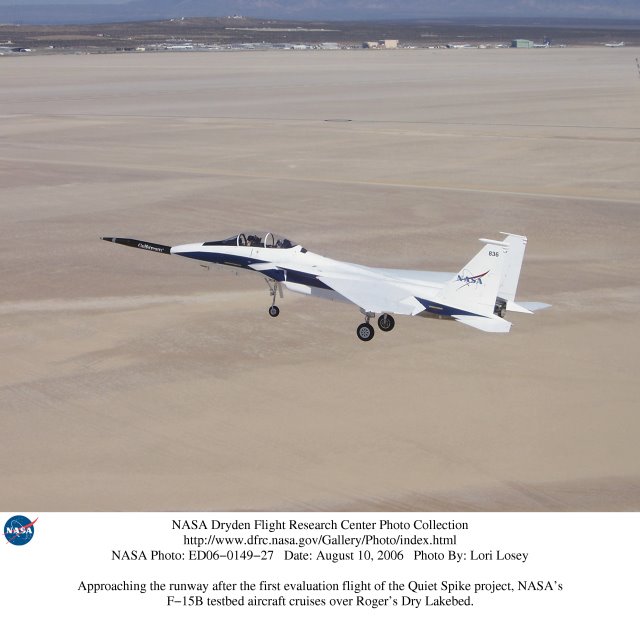
Gulfstream Aerospace and NASA's Dryden Flight Research Center have teamed in a project called Quiet Spike to investigate the suppression of sonic booms. The project centers around a retractable, 24-foot-long lance-like spike mounted on the nose of NASA Dryden's F-15B research testbed aircraft.

The spike, made of composite materials, creates three small shock waves that travel parallel to each other all the way to the ground, producing less noise than typical shock waves that build up at the front of supersonic jets. Before flying with the giant spike, NASA Dryden engineers and technicians, working alongside their Gulfstream counterparts, mounted it on the aircraft and conducted various structural tests on the ground.

"The partnership between Gulfstream and Dryden during Quiet Spike installation and ground testing on the F-15B has produced a wealth of valuable information. The duration of this flight test effort will prove to be exciting and informative for everyone involved," says Leslie Molzahn, NASA Dryden's operations engineer on the project.

Since the project's first flight, conducted on Aug. 10, several more flights have put the system's structural integrity to the test before moving on to sonic boom suppression measurements.

While these tests won't actually "quiet" the F-15's sonic boom, they will show that the spike's design is capable of use in a real flight environment. The flights are monitored in NASA Dryden's mission control.

"Working with Gulfstream has provided a significant advantage to this flight research project," NASA project manager Michael Toberman says. "This project merges Gulfstream's manufacturing expertise with NASA Dryden's flight test expertise."

Shockwaves develop around aircraft as they near Mach 1, or about 760 mph, the speed of sound at sea level. When an aircraft travels supersonically, the resulting shockwaves can produce a loud sonic boom that rattles windows and nerves on the ground under the path of the supersonic jet.

Because of sonic boom intensity, the Federal Aviation Administration prohibits supersonic flight over land, except in special military flight corridors. Gulfstream's Quiet Spike puts spike-induced sonic boom suppression theory to the test in the actual flight environment afforded by NASA's supersonic F-15B.

The aircraft has served NASA and industry in this role for years as a flying wind tunnel and supersonic testbed vehicle. Once the Quiet Spike has proven to be structurally sound, it can be incorporated with confidence onto advanced low-boom configuration aircraft to further lessen the impact of sonic booms.

"By changing length in-flight, Quiet Spike will demonstrate yet another way to shape the sonic boom," says Gulfstream spokesman Robert Baugniet. "It's a necessary step toward low boom aircraft design and truly quieting the sonic boom."

U.S. Votes No On UN Gun Ban


The member states of the United Nations today took a first step toward approving a treaty that could save hundreds of thousands of lives each year by controlling the global arms trade.

Meeting in New York today, the First Committee of the General Assembly voted to study the feasibility, scope and draft parameters for a comprehensive, legally binding agreement establishing common international standards for the import, export and transfer of conventional arms. The United States was the only country to vote no on the resolution.

"The world is awash with weapons, including an estimated 640 million firearms, or one gun for every ten people on the planet," said Joe Volk, executive secretary of the Friends Committee on National Legislation in a statement applauding the U.N. vote. "All too often, weapons fall into the wrong hands and are used against innocent people. Half a million people die each year as a result of the easy availability of small arms and light weapons."

Though almost all arms-exporting states, including the United States, have guidelines that are intended to control international arms transfers, many countries do not apply these guidelines fully or ensure they are respected. As a result, conventional weapons easily and frequently fall into the hands of violent militias and human rights abusers. Irresponsible arms transfers exacerbate violent conflicts, perpetuate poverty and underdevelopment, and contribute to countless violations of human rights and humanitarian law.

"Countries often give priority to profits in the lucrative weapons market over respect for human security," said Joe Volk. "The setting of global standards would ensure that all states follow the same rules when selling weapons."

The United Nations vote today represents an important first step. FCNL and other groups and individuals concerned with the proliferation and misuse of conventional weapons will continue to press governments to ensure that a strong treaty comes to fruition.

Twin Cities Outlet To Offer Cheaper Alternative Fuel


For a few hours on Friday, Oct. 27, the Holiday Stationstore at 6921 Pine Arbor Drive inCottage Grove, Minn. will offer drivers a holiday from higher fuel costs.

Twin Cities motorists with flexible fuel vehicles -- cars, trucks and vans that can use either gasoline or E85, a cleaner-burning alternative fuel -- can purchase up to 30 gallons of E85 at the station from 2 p.m. until 5 p.m. for just 99 cents a gallon.

There are an estimated 5 million flexible fuel vehicles (FFVs) currently on the road today.

"Not long ago, special prices on E85 were more common in the TwinCities metro area, as we tried to raise consumer awareness of cleaneralternatives to gasoline," says Bob Moffitt, communications director forthe American Lung Association of Minnesota. "The tactic must have worked,because sales from the 300 or so stations that offer E85 in Minnesota haveshattered all national records this year, and are on track to exceed 20million gallons in 2006."

E85 is a blend of up to 85 percent ethanol and just 15 percent gasoline. Like gasoline, the price of E85 varies, but in Minnesota the high-octane fuel is typically less expensive than 87-octane regular gasoline.

The American Lung Association of Minnesota maintains a website that lists all of the vehicles that can use E85 and the locations of all stations in the upper Midwest that sell the largely renewable fuel:http://www.cleanairchoice.org/

The sales event is sponsored by the Minnesota Corn Growers Association, the Minnesota Coalition for Ethanol, the Minnesota Department of Agriculture, the Minnesota Department of Commerce, AgStar Financial Services, GeneralMotors Corp., the National Ethanol Vehicle Coalition, the U.S.Department of Energy Clean Cities program and the American Lung Association of Minnesota.

Study: Middle Class Caught In Fiscal Crunch


America’s middle class families are caught in an unprecedented crunch, according to a recent report by the left-leaning Center for American Progress.

Despite a growing economy, their incomes have remained stagnant or flat. And because prices for big ticket items such as housing and health care have gone through the roof, families are not able to put away a rainy day fund. Instead, middle class families have had to take on more debt to maintain their basic needs and, as a consequence, have been unable to save. Taken together, these trends have left families increasingly vulnerable to the impact of an economic emergency, such as unemployment or a medical emergency.

According to the report, more families are more vulnerable today to unexpected events such as a layoff or a medical emergency. A few stark indicators of the precarious financial position of America’s middle class provide a much-needed reality check, highlighting why so many families feel economically insecure today. Over the past five years, the number of families with enough resources to weather a layoff or a medical emergency has declined dramatically, wiping out the gains in financial security that many families experienced in the 1990s.

The study found that five years into an economic recovery, average job growth is one-fifth that of previous business cycles and wages are flat when inflation is factored into the equation. At the same time, the cost of families’ top five expenditures— medical care, housing, food, household operations and cars—have risen more than twice as fast as the cost of the bottom five items. To maintain their day-to-day consumption, families took on a record amount of debt equivalent to 126.4 percent of disposable income in the first quarter of 2006.

Folk Pottery Museum Exceeds Expectations


The first and only U.S. folk pottery museum has far exceeded estimates for attendance afteronly its first full month of operation, museum officials say.

Hundreds of visitors from throughout Georgia and as far awayas Alaska, Colorado, California and Sicily have recorded numerous favorablecomments about the new museum.
"Visionary - great history and fantastic education," says Allan Goldman, of Atlanta.

Well-known among pottery collectors for its ongoing 19thcentury-tradition of ash- and lime-glazed stoneware, northeast Georgia is home to noted multi-generational potter families such as Meaders, Hewell, Dorsey and Ferguson.

The Folk Pottery Museum's collection includes more than 200 pieces dated from the 1840s to modern day, with around 160 pieces currently displayed.

On loan from Levon and Elmaise Register are works from South Carolina'sEdgefield district, including a large jar by Dave. A 19th century slave, respected artisan and poet, Dave's work reflects the folk pottery stylecommonly found in Edgefield, S.C.

Also on loan is a Mississippian earthenware bowl (circa 1400 A.D.,excavated at the nearby Nacoochee American Indian Mound) from theSmithsonian Institution's National Museum of the American Indian.

John Burrison, the museum's curator, is a Georgia State University folklorist and author of Brothers in Clay: The Story of Georgia FolkPottery. Co-curator is popular northeast Georgia folk potter Michael Crocker.

"There is a living, thriving folk pottery tradition in northeast Georgia that is deeply rooted," says Chris Brooks, museum director. "Our museum interprets the artistic and historical aspects of this heritage."

Made possible through a gift from Dean and Kay Swanson, the museum islocated on the Sautee-Nacoochee Center campus. Just four miles from Helen,Ga., it is a two-hour drive from Hartsfield-Jackson Atlanta International Airport.

Gene Controlling Eye Lens Development Identified


Researchers at St. Jude Children's Research Hospital have discovered in mouse models that a genecalled Six3 is one of the earliest critical regulators that control development of the eye lens in the mammalian embryo.

Mutations in human Six3 have been identified in patients withholoprosencephaly, a disease that can cause the part of the brain calledthe cerebrum to fail to divide normally into two lobes.

Previously, the St. Jude team demonstrated that Six3 activity iscritical for the normal development of the forebrain in mice. Theresearchers have now extended these results by showing in the developingeye that Six3 normally exerts its effect by directly activating Pax6, a gene considered the "master regulator of eye development."

"This information might one day contribute to strategies for preventingor treating diseases caused by disruption of Six3 function," says Guillermo Oliver, a member of the St. Jude Genetics and Tumor Cell Biology department and senior author of a paper on the work.

"Our work gives us important insights into the interplay of genes during this crucial time," said Wei Liu, a postdoctoral fellow in Oliver's laboratory and first author of the paper.

CCVM: Maintain Net Neutrality In AT&T Merger


The Federal Communications Commission (FCC) must not approve the merger of AT&T and BellSouth without attaching strong and enforceable Internet Freedom/Net Neutrality conditions, the Center for Creative Voices in Media has told the commission.

“What is at stake in the FCC’s consideration of this colossal combination of AT&T and BellSouth is nothing less than the future of the Internet, and whether that future Internet will be open or closed to independent and diverse voices and viewpoints. Not just creative voices – all voices,” says Jonathan Rintels, executive director of Creative Voices.

The Center for Creative Voices in Media is a nonprofit organization dedicated to preserving in America’s media the original, independent, and diverse creative voices that enrich its culture and safeguard its democracy.

The FCC is a federal regulatory agency and consists of five commissioners -- three appointed from the political party of the sitting president and two from the opposition.

AT&T and BellSouth announced a proposed merger in March, saying at the time that the deal would benefit customers and promote competition.

“Internet Freedom – or Network Neutrality – is of unique and vital importance to creative media artists. From the most prominent well-established independent television or film producer to the kid with nothing but a video camera, a computer, and a dream, creative media artists increasingly use the broadband Internet to avoid the chokehold that broadcasters and cable operators have over video distribution to the American public," Rintels says.

“But that’s threatened when phone and cable companies control, by the FCC’s own figures, an astonishing 99.6 percent of all American consumers with broadband, and those companies can also control where their captive customers go on the Internet," he says. "That’s why the commission must attach strong and enforceable Internet Freedom/Net Neutrality conditions to this transaction.

“AT&T’s offer to abide by the FCC’s pro-Internet Freedom Policy Statement for a period of 30 months after the merger’s approval is not merely insufficient; it thumbs its nose at the American public and the commission," he adds. "By definition, the FCC’s approval of this transaction cannot be in the 'public interest' when the combined company retains the right to ignore and violate after just 30 months the public interest in net neutrality, as so recently expressed by the commission."

OPINION: Save Bats This Halloween


Companies are apparently catching bats in the wild and killing them for sale as “art” in glass frames, with these items showing up on eBay.

One small bat, also known as the short-nosed fruit bat, is a major target of this cruel practice, according to an email received here at Life, The Universe ...

Opponents of this practice have created an online petition to put a stop to this practice.

"Bats already face severe threats due to habitat loss. Killing additional bats for personal collections only leads to further decline of wild bat populations," the email says.

"Fruit and nectar-eating bats are responsible for hundreds of economically important products including foods, drinks, medicines, timber, fibers, dyes and fuel," it adds. "Wild varieties of many of the world’s most economically valuable crop plants, such as bananas, rely on bats for survival. Insect eating bat species are natural enemies of night-flying pests that damage crops, reducing the need for chemical pesticides."

Seems to us like the perfect way to "treat" and not "trick" this Halloween.

Wednesday, October 25, 2006

DOE Funds Solid State Lighting R&D At Sandia


U.S. Energy Secretary Sam Bodman announced that Sandia National Laboratories is the new home of the National Laboratory Center for Solid-State Lighting Research and Development.

Sandia will conduct vital solid-state lighting research and coordinate related research efforts at several other national laboratories.

The Department of Energy will provide funding of $5 million for seven research projects in solid-state lighting, including $2.6 million for four Sandia projects, Bodman said. The funding comes from DOE’s Office of Energy Efficiency and Renewable Energy.

“The research will be conducted at the new nanotechnology centers at our national laboratories,” Bodman said, including the just dedicated Sandia/Los Alamos Center for Integrated Nanotechnologies (CINT). “This is part of nearly $20 million we are committing this year to support research and development efforts in this rapidly emerging technology.”

Bodman laid out the case for investment in solid-state lighting R&D, noting that 18 percent of all US energy generated — valued at some $55 billion — goes to lighting homes, offices, and factories.

“We believe a set of revolutionary new technologies called solid-state lighting,” Bodman said, “offer excellent prospects for meeting our future lighting needs in a less costly, more efficient way than today’s incandescent and even fluorescent fixtures. . . . We at the Department of Energy want to see it fully developed as quickly as possible.

“We also believe that solid-state lighting presents an excellent opportunity for the U.S. to assume a leadership role in an emerging industry that can generate thousands of high-paying, high quality jobs in the years ahead and help maintain the U.S. economy’s strong record of global leadership in growth and jobs creation.”

Every intersection in Albuquerque where the traffic signals have been changed to use solid-state LED lights, the city saves about $1,000 a year, according to U.S. Rep Heather Wilson (R-N.M.), who was also on hand at the Sandia announcement.

Moderate Dems Outline Energy Plan


The Progressive Policy Institute (PPI) has released a progressive energy platform that it says will lead to a clean energy future.

PPI is associated with the centrist Democratic group, the Democratic Leadership Council, which was once headed by Bill Clinton.

The report authored by Jan Mazurek, Roger Ballentine, Randolph Court and Will Marshall, outlines a plan to address America's two distinct energy needs: fuel for transportation and power to generate electricity.

Their proposals include:

  • Capping U.S. carbon emissions -- now: Establishing a national cap-and-trade regulatory system to control carbon dioxide emissions would create a profit motive for companies to burn less oil and other fossil fuels.
  • Capturing the "clean tech" market: Progressives should champion cutting-edge research and innovation, tax incentives, and investments that will focus entrepreneurial attention on developing and marketing all manner of energy-efficient "green technologies," and encourage auto manufacturers to dramatically step up the production of clean vehicles.
  • Diversifying energy sources: The report calls for expanding the use of clean-burning natural gas while also supporting investments in coal gasification, biomass, and other technologies that can be used to generate electricity with fewer greenhouse emissions.
  • Aggressively expanding the use of renewable energy: Progressives should demand that the federal government create a national renewable portfolio standard for electric utilities and endorse a goal of bringing 100,000 new megawatts of clean power online by 2020.

The authors emphasize that the state of our country's energy policy is an urgent problem demanding immediate action. "America's national security, economic vitality, and environmental health demand that the country neither accept today's energy policy status quo, nor passively wait for some distant wholesale shift to a clean future."

DHS Proposes RFID Tech Use For Border Crossings


The Department of Homeland Security (DHS) is proposing to expand the use of vicinity radio frequency identification (RFID) technology at U.S. ports of entry. The plan is drawing fire, however.

The vicinity RFID technology, to be compatible with the PASSport card, would allow a travel document to be read from several feet as a vehicle approaches inspection, according to DHS.

The PASSport card, part of the People Access Security Service (PASS) System, is designed to meet the specific requirements of the Western Hemisphere Travel Initiative (WHTI) for U.S. citizens crossing U.S. borders by land or sea.

WHTI is the U.S. government’s plan to implement a provision of the Intelligence Reform Terrorism Prevention Act of 2004, which requires citizens of the United States, Canada, Bermuda and Mexico to have a passport or other designated document that establishes the bearer’s identity and nationality to enter or re-enter the United States.

“Vicinity RFID technology will be a force multiplier for our U.S. Customs and Border Protection (CBP) officers by providing them with up-front information they need to quickly make critical decisions about travelers entering or re-entering the United States,” says CBP Commissioner Ralph Basham. “The deployment of this advanced technological solution will improve public safety, national security and the integrity of the immigration process.”

DHS says that to protect the privacy of Americans who opt to use the PASSport card, no personal information will be stored or transmitted on the RFID chip on the card. The technology will transmit only a number between the card and the reader which will be matched against a DHS database. While no personally identifiable information will be transmitted, DHS says it is taking steps to help ensure that this number cannot be intercepted during transmission to an authorized reader at a port of entry.

Vicinity RFID, has been used successfully in highway toll systems across the United States, demands little of the traveler and can read multiple cards simultaneously inside a vehicle, DHS says. The vicinity RFID technology will increase the security of the border while facilitating commerce at the port of entry, it adds.

However, the SmartCard Alliance is criticizing the plan.

"Implementing a solution based on low-security supply-chain RFID technology may actually intensify the border security problem," the industry association says. "The RFID card favored by DHS can easily be read by unauthorized personnel who can obtain the individual’s unique identification number. With this number, anyone who somewhat resembles the legitimate cardholder could then spoof the system to gain entrance to the United States by programming a supply-chain tag to look like a PASS card."

Scientists Further Link Hurricanes, Climate Change


Researchers have linked human activities to rising ocean temperatures in hurricane formation regions, further connecting severe storms to global climate change.

Using 22 different computer models of the climate system, atmospheric scientists from Lawrence Livermore National Laboratory and 10 other labs say that they have shown that the warming of the tropical Atlantic and Pacific oceans over the last century is directly linked to human activities.

For the period 1906-2005, the researchers found an 84 percent chance that external forcing (such as human-caused increases in greenhouse gases, ozone and various aerosol particles) accounts for at least 67 percent of the observed rise in sea surface temperatures (SSTs) in the Atlantic and Pacific hurricane formation regions.

In both regions, human-caused increases in greenhouse gases were found to be the main driver of the 20th century warming of SSTs, the scientists say.

"We’ve used virtually all the world’s climate models to study the causes of SST changes in hurricane formation regions,” says Benjamin Santer of Livermore’s Program for Climate Model Diagnosis and Intercomparison, and lead author of a paper describing the research.

The use of fossil fuels are said to emit greenhouse gases that cause global climate change.

This research shows a further direct link between human activities, climate change and killer storms.

“In the real world, we’re performing an uncontrolled experiment by burning fossil fuels and releasing greenhouse gases,” Santer says. “We don’t have a convenient parallel Earth with no human influence on climate. This is why our study relied on computer models for estimates of how the climate of an ‘undisturbed Earth’ might have evolved. The bottom line is that natural processes alone simply cannot explain the observed SST increases in these hurricane breeding grounds. The best explanation for these changes has to include a large human influence.”

The researchers note that hurricanes are complex phenomena and are influenced by a variety of physical factors such as SST, wind shear, moisture availability and atmospheric stability. The increasing SSTs in the Atlantic and Pacific hurricane formation regions isn’t the sole cause of hurricane intensity, but is likely to be one of the most important influences on hurricane strength.

“The models that we’ve used to understand the causes of SST increases in these hurricane formation regions predict that the oceans are going to get a lot warmer over the 21st century,” Santer says. “That causes some concern. In a post-Katrina world, we need to do the best job we possibly can to understand the complex influences on hurricane intensity, and how our actions are changing those influences.”

This Election Said To Be Most Expensive


Next month's mid-term election for control of the U.S. House of Representatives and Senate will be the most expensive midterm election ever, according to the Center for Responsive Politics.

Candidates, national political parties and outside issue groups will spend roughly $2.6 billion by the end of 2006 to influence the 472 federal contests around the United States and pad the war chests of incumbents not running this year, the organization says.

The non-partisan center, which has been tracking the money in federal politics since the 1980s, says it based its 2006 prediction on spending to date and the final tally for the 2002 midterm election.

In 2004, which included a presidential contest, the election cost $4.2 billion. About $2.2 billion was spent in 2002, which preceded campaign finance reforms that limited the influence of large
corporate and union donors. The estimate for 2006 would represent an 18% increase over '02, the center says.

"The torrid pace of fundraising for this election is a reflection of how competitive November 7th will be," says Sheila Krumholz, the center's acting executive director and longtime research director. "As Election Day approaches, it's important for candidates and citizens to remember that you can't win without votes either."

All candidates for House and Senate have raised nearly $1.3 billion, based on data available from the Federal Election Commission on Oct. 23. Candidates still in the running for House have raised, on average, about $760,000, while Senate candidates have raised $5.8 million (which includes money raised since the start of the six-year term in 2001). Incumbent senators have a 4:1 advantage over their current challengers, on average. House incumbents have outraised their current challengers 7:2.

Republicans are expected to retain their edge in fundraising through the election. The center predicts that Republican interests-candidates, party committees and conservative advocacy groups-will spend $1.4 billion on this election. Democratic interests will spend $1.2 billion, the center projects.

The money paying for the election-the home-stretch advertising, voter mobilization and other campaigning-is coming from the same industries and interests that have largely funded past elections. Topping the Center's 2006 list of big donors are lawyers, the real estate industry, Wall Street and, as usual, contributors who list their occupation as "retired." Business interests account for about three-quarters of all contributions, with ideological, labor and other interests making up the rest.

"The industries and interests funding the 2006 election have been big givers for years, and they're building on their influence now. They're making an investment they hope will pay off once the 110th Congress takes office in January," Krumholz says.

To find out more about the influence of political action committees (PACs), the top industries funding the election, individual donors, 527 committees and-despite the hot races that will determine control of Congress-the overall lack of competition in congressional contests, see the center's full report at http://www.OpenSecrets.org/pressreleases/2006/PreElection.10.25.asp.